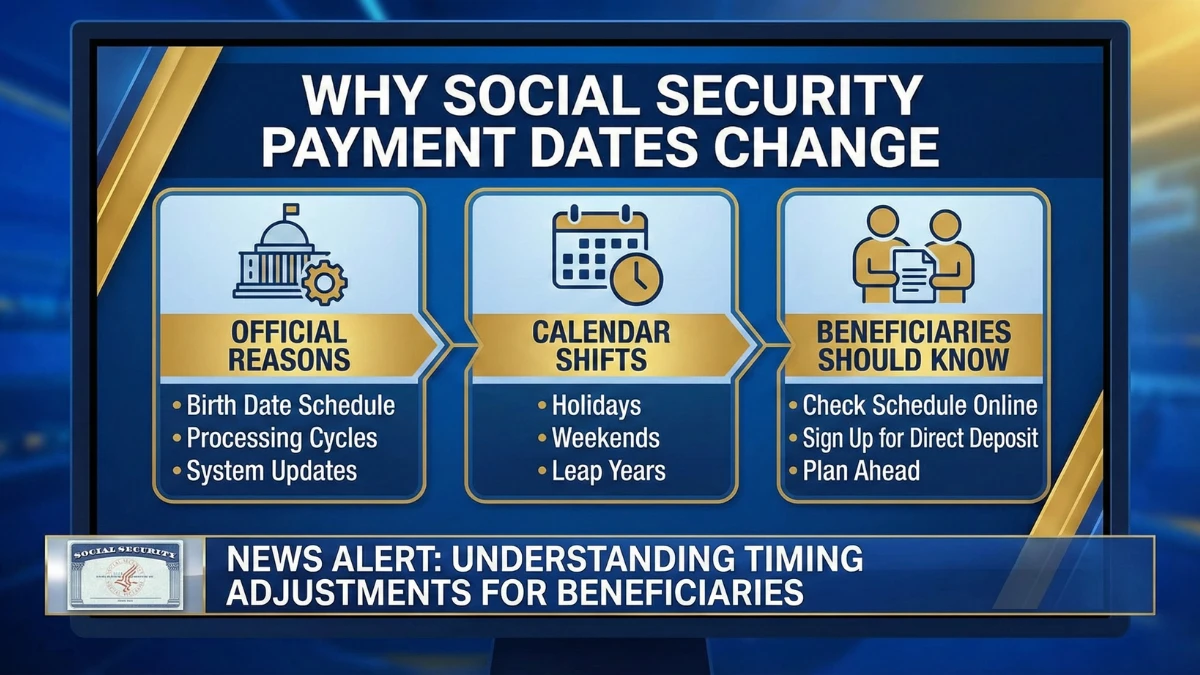
Many beneficiaries notice that Social Security payment dates sometimes shift from one month to another and worry something is wrong. In reality, these changes usually follow long-standing rules set by the Social Security Administration. This article explains the legitimate reasons payment dates move, how the schedule works, and what beneficiaries should expect so normal adjustments aren’t mistaken for missed or delayed payments.
How Social Security Payment Dates Are Normally Set
Most Social Security retirement, survivor, and disability benefits are paid on Wednesdays based on the beneficiary’s birth date. Supplemental Security Income (SSI) follows a different rule and is usually paid on the first business day of the month.
Common Legitimate Reasons Payment Dates Shift
Payment dates can move when the scheduled date falls on a weekend or federal holiday. In these cases, the SSA issues payments on the nearest prior business day to ensure beneficiaries receive funds without delay.
Weekend and Holiday Adjustments Explained
If a payment date lands on a Saturday, Sunday, or holiday, the deposit is advanced. For example, when the 1st of the month is a weekend, SSI payments are often made at the end of the previous month.
Birth-Date Schedule and Monthly Variations
| Birth Date | Normal Payment Timing |
|---|---|
| 1st–10th | Second Wednesday |
| 11th–20th | Third Wednesday |
| 21st–31st | Fourth Wednesday |
| SSI recipients | First business day |
Does a Shifted Date Mean an Extra or Missing Payment
No. A shifted payment date does not mean an extra payment or a skipped benefit. It is the same monthly benefit released earlier or later due to calendar rules.
Bank Processing vs SSA Release
Sometimes funds appear earlier or later because of bank processing times, not because SSA changed the payment date. SSA releases payments on schedule, but banks decide posting times.
When to Contact SSA
Beneficiaries should contact SSA only if a payment is missing after allowing time for bank processing and checking the official payment calendar.
KEY FACTS
- Payment date shifts are usually due to weekends or holidays
- Birth-date rules determine Wednesday payments
- SSI follows a separate first-business-day rule
- Shifted dates do not mean extra payments
- Bank posting times can vary
Conclusion
Social Security payment date changes are typically routine calendar adjustments, not errors or benefit reductions. Understanding the official scheduling rules helps beneficiaries plan confidently and avoid unnecessary concern when dates move.
Disclaimer
This article is for informational purposes only and does not constitute financial or legal advice. Social Security payment timing is governed by official SSA rules and banking procedures.