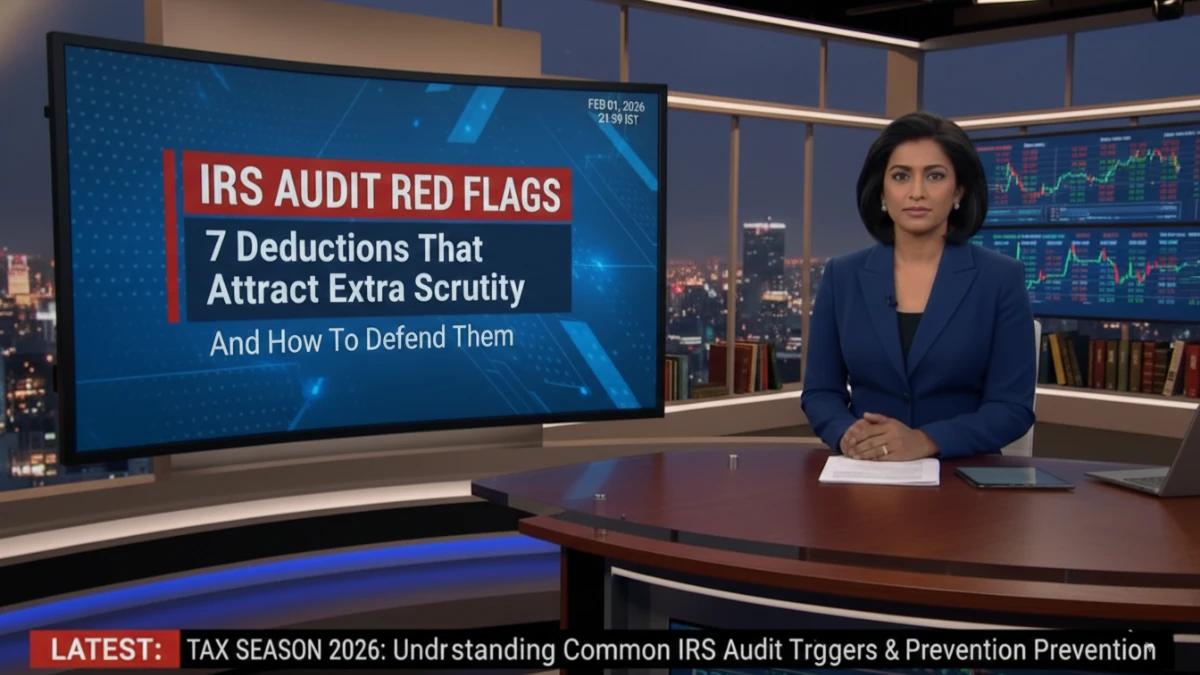
Many taxpayers claim deductions every year, but certain irs deductions often make the IRS look twice because they are frequently misused, overstated, or improperly documented, increasing the risk of audits and refund delays if not handled correctly.
Why the IRS Closely Reviews Certain Deductions
The IRS flags specific tax deductions because they historically show higher error rates, exaggerated claims, or abuse, and when these irs audit red flag deductions appear on a return, the agency may request proof or conduct a deeper review.
IRS Deductions That Get Extra Attention
| deduction type | why irs reviews it |
|---|---|
| home office | often overstated or misused |
| charitable donations | valuation and proof issues |
| business travel | mixed personal expenses |
Home Office and Business Expense Deductions
The home office deduction and business expense deductions are common irs audit triggers because taxpayers sometimes claim personal space or non-business costs, making accurate measurements and expense separation critical.
Charitable and Medical Deductions Under Scrutiny
Large charitable donation deductions and high medical expense deductions often raise IRS attention when they exceed income norms, requiring donation receipts, appraisals, and medical payment proof to validate the claims.
Income-Related Deductions That Raise Questions
Deductions tied to income, such as self-employed tax deductions or unusually high write-offs compared to reported earnings, can prompt IRS verification to ensure the deductions align with actual income activity.
Deductions the IRS Watches Closely
- home office deduction must meet strict rules
- charitable donation deductions need receipts
- business expense deductions require records
- medical deductions must exceed limits
- self-employed deductions must match income
Conclusion
These irs deductions are not illegal, but they attract attention because they are often abused, and taxpayers who keep detailed records and follow IRS guidelines can confidently prove their deductions are legitimate.
Disclaimer
This article is for informational purposes only and does not constitute tax or legal advice, and taxpayers should consult IRS guidance or a qualified tax professional before claiming tax deductions.